শুক্রবার, ০৬ নভেম্বর ২০২৬, ০৮:৪১ অপরাহ্ন


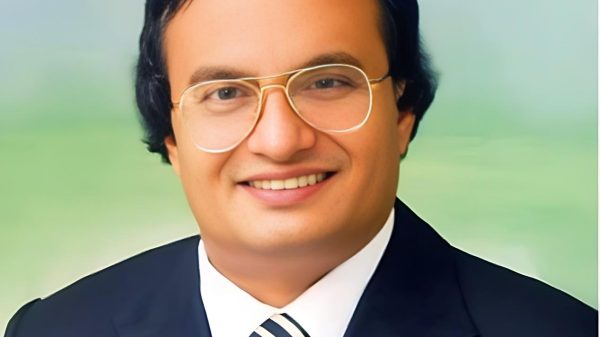
Dr. Abdul Wadud.
‘ The dead body of a child on the shoulders of a father’ is the heaviest thing in the world. And if it is the dead body of a small, tender child, then it is even more difficult to carry it.’ The school campus, which used to be bustling after the holidays, was filled with cries. After the holidays, the tender children took a break from life. In an instant, they became stars in the sky. The sky and air were filled with sadness. It is really difficult to bear so much grief.
On July 21, classes were going on like any other day. Someone was playing in the field. Just then, a Bangladesh Air Force F-7 BGI training aircraft crashed into the students’ building. The nose of the crashed aircraft entered the stairs of the building. Two classrooms of the children were burnt to ashes by the impact of its two wings and the fire. An eight- or nine-year-old child came out of the school yard with his body scorched by the fire, crying. His uniform was burnt to ashes. Seeing this tragic scene was unbearable. People standing nearby were shocked and in pain. Perhaps they were bewildered. Social media is flooded with this video. I don’t know which mother’s treasure this child is. How is the little child now, suffering from indescribable pain? Many other children came out of the school gate with their burnt bodies, crying and wailing.
I remember the picture of the naked napalm girl crying on the streets of Vietnam in 1973. When that picture was printed in the New York Times, the world’s conscience was shaken. Our children, scorched by the Milestone disaster, have also become a burning image of deep pain. Teacher Mehreen, considering her own life and death as insignificant, pulled them out of the fire. She tried her best to save them. But she herself could not survive. An ideal teacher is such a noble soul.
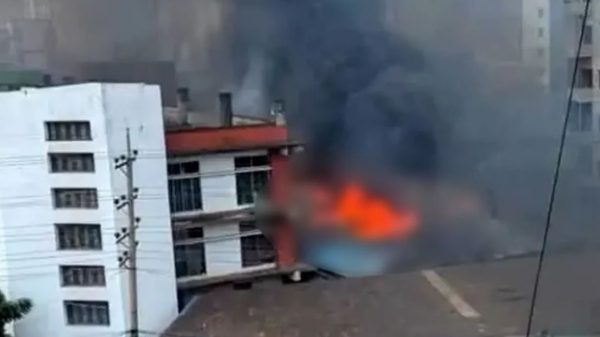
The plane crash at Uttara Milestone School has left the entire nation stunned in grief and protest. The sudden sound of the explosion, the billowing black smoke, and the terrifying image of the young children running around in the flames that flared up in the blink of an eye will never be forgotten. The cries of the burnt children, the distraught teachers, the wailing of the dying children and teenagers, the boundless anxiety on the faces of the parents searching for their children – all of this creates an intensely sad scene.
There was some confusion from the beginning about the death toll in the accident at Milestone School and College in Uttara. The list published by the Combined Military Hospital (CMH) on July 24 listed the number of deaths as 15. However, the updated list on July 27 revised it to 14. According to the latest information, the total number of deaths in the accident is 34. When the Ministry of Health released a list of the students who died, questions arose in the public mind. In view of this, the Ministry of Health and related agencies gave a detailed explanation based on forensic analysis. The Directorate General of Health has informed that forensic tests have confirmed that the actual number of deaths in the accident is 34. Of these, 14 died at CMH.
This tragic tragedy is not just an accident, it has exposed the true nature of our state mismanagement, civil security and responsible behavior in disasters. However, it is hopeful that even in this incident, the extraordinary humanitarian activity of the ordinary people of Bangladesh has emerged. Even before the fire was extinguished, people around rushed to the rescue. Some brought water, some helped burn children reach the hospital. This humanitarian initiative of countless unknown faces is one of the prides of our nationhood.
The common people of Bangladesh have always come forward in times of disaster. Whenever disaster strikes, we have the extraordinary sensitivity of the common people of Bangladesh. During the days of humanitarian disaster in the seventies, we saw sensitive youths marching in front of the banner ‘Cry Bengali Cry’ to collect relief. In 1986, as soon as the news of the Jagannath Hall tragedy was received, thousands of youths jumped into the rescue work. Whether it was the Rana Plaza collapse or the Corona pandemic – wherever there was a humanitarian disaster, countless people, forgetting their own interests, stood by the side of the people in danger. Even after the Uttara accident, we saw how many people rushed to the Burn Institute to donate blood, and voluntarily reached with food and emergency medicines. Many even held the hand of an unknown burnt child sitting in the hospital and shed tears. It is a pity that the politics of this country has not taken care of this humanitarian feeling and sensitivity of Bengalis, especially the youth. In most cases, our politics has incited division and violence.
In the backdrop of the milestone tragedy, along with humanity, some sad and striking images have emerged. Immediately after the accident, a group of political leaders and their followers have arrived at the hospital in droves. They have stood in front of the sensitive burn patients’ rooms and made unnecessary speeches, brought press photographers and held photo sessions in the name of ‘expressing condolences’, and some have made political statements blaming the government or some party for the incident. This has disrupted the orderly atmosphere of the hospital, and the families of the burn patients have become even more worried.
Humanitarian disasters are never a suitable place for political gain. Responsible behavior in a disaster does not mean just posting pictures of sympathy, but ensuring real assistance. At this time, what is most needed is blood, treatment, prayers and silent support. However, the behavior of some political groups has turned it into a mere media show, which is both eye-catching and disrespectful to the injured people.
We need to look at the source with an investigative eye and rethink the limitations of our state management in the context of this incident. How is air traffic being carried out in such a populated area, how was such a risky airstrip approved next to a school, what is the capacity of the fire service and burn unit in the aftermath of an accident – these questions need answers. We lament after an accident, but there is no initiative to prevent it. This laxity carries a terrible indication for our future. However, there is a bright line of light in this too. Just as we have seen emotional posts on social media, we have also seen responsible initiatives. University students have organized to donate blood, local clubs have formed funds to provide financial assistance, ordinary people have rushed to the burn unit to help according to their ability. This spontaneous humanitarian response proves that the light of compassion still burns within people.
Tejgaon Old Airport and Kurmitola Airbase in Dhaka are the locations of these two. How safe is it for regular fighter jet flights in the capital’s skies? Do international rules allow it? The question arises naturally. But why don’t those who are policymakers of the state think about it?
According to Annex Two and Annex Eleven of the International Civil Aviation Authority (ICAO), flying at low altitudes over populated areas is discouraged in conducting any training flights. At the same time, maintaining a minimum safe altitude is mandatory, especially in densely populated and diplomatic areas.
In countries that prioritize public safety, no military or civilian flight training is conducted in densely populated areas. In Japan, training over cities is prohibited, most training is conducted over the sea or in deserted areas. The United States has banned low-altitude training flights over populated areas. No training aircraft are seen in the skies of Paris – only with specific permission on special occasions. In New Delhi, India, military aircraft are prohibited at low altitudes. Training takes place at a large military base in Uttar Pradesh, Rajasthan, and Maharashtra.
Conducting fighter jet training in populated areas is not only a security risk, but also a major violation of international norms, humanitarian obligations, and environmental considerations.
Fighter jets fly very fast. If they crash into populated areas due to any mechanical failure or pilot error, there can be massive loss of life and destruction. The noise of fighter jets can be up to 120-140 decibels, which increases the risk of hearing loss, stress, and heart disease in the long term. Its impact on children, the elderly, and the sick is severe. People are frightened by sudden loud noises and frequent flying. These flights create chaos during schools, hospitals, and exams.
Bangladesh’s long coastal area could be a suitable place for such training. The government must take a decision quickly after this accident.
Meanwhile, the Chinese-made F-7 BGI fighter jet is considered the most advanced version of the Chengdu J-7 series. It is based on the Soviet-era MiG-21, a model linked to numerous accidents in many countries. Bangladesh bought 16 F-7 BGIs from China in 2011 and they were added to its fleet in 2013. China itself stopped production of this model that same year. The F-7 BGI is said to be a symbol of ‘low-cost modernization’ of the Bangladesh Air Force. But in reality, it is a technologically backward, risky platform. Most countries in the world have now phased out the MiG-21 or similar models. India itself has announced that it will completely phase out the MiG-21 by 2025.
Bangladesh still has about 36 F-7s, most of which are old technology. A fighter jet is not just measured by speed or weapons capacity—its safety and reliability are equally important. Training on old, risky platforms means gambling with the lives of future brave pilots. This is not just a question of budget—it is a question of justice. A question of life.
According to analysts, as per the guidelines of the International Civil Aviation Organization (ICAO), it is mandatory to keep a specific area around the airport as a ‘buffer zone’ or security fence, where the construction of schools, hospitals or densely populated structures is strictly prohibited. However, there are various structures including residential buildings next to or near the runway in this city. In that case, the concerned should understand the warning that the milestone tragedy has given us. Now, the safety of all educational institutions and hospitals located near the airport should be reviewed. At the same time, a vast field or pasture area away from the locality should be determined for the flight of fighter jets or a separate runway should be constructed at some other place. It should be ensured that fighter jets are not operated in such risky areas in the future. An alternative runway should be established immediately. The government should take necessary measures now to prevent the recurrence of the accident. It should be remembered that if caution is not exercised, a bigger disaster can occur in the future. Therefore, the government should first look at the safety of the people. Nothing can be done temporarily or semi-permanently anywhere. At least where there is a question of public safety. We firmly believe that the government and the concerned authorities will learn from this tragic incident, the tragic death of so many children. They must give their word to the nation – in the future, fighter jets will not be allowed to fly in such risky areas. An alternative runway will be established immediately. Because if everyone is not careful, there may be greater damage in the future. Therefore, our final word is that the government must take necessary measures now to prevent a recurrence of the accident. Wasting time on this is not desirable in any way.
Such sudden and horrific accidents can have a profound psychological impact on children and adolescents. Especially those who were present at the scene, were injured, or saw friends and classmates in a helpless state before their eyes—they may experience symptoms such as acute stress disorder (ASD), traumatic stress, nightmares, panic, startle, sleep problems, and not wanting to go to school. People with post-traumatic stress disorder should be treated with a psycho-somatic-social approach. Treatment of PTSD should be continued for a long time through cognitive behavior therapy, eye movement desensitization reprocessing therapy (EMDR), and long-term exposure therapy. The patient should be given psychological support, counseling, psychotherapy, and, if necessary, medication for the long term. At the same time, social support and cooperation should also be provided.
The milestone tragedy has shown us how vulnerable we are and what immense potential for humanity lies within our people. We must transform grief into strength. We must prove it with real action, not just Facebook statuses. So that tomorrow there will never be another morning where the smell of a child’s burnt flesh mingles with the cries of a mother.
Author: Father of Fikamli Theory Academic, researcher and political analyst Wildlife expert.
স্বর্বস্বত্ব সংরক্ষিত-২০২৩-২০২৬,স্মার্ট টিভি,র ওয়েবসাইটের লেখা,ছবি,ভিডিও অনুমতি ছাড়া ব্যবহার করা দন্ডনীয় অপরাধ।












Leave a Reply