শুক্রবার, ০৬ নভেম্বর ২০২৬, ০৬:২৩ অপরাহ্ন


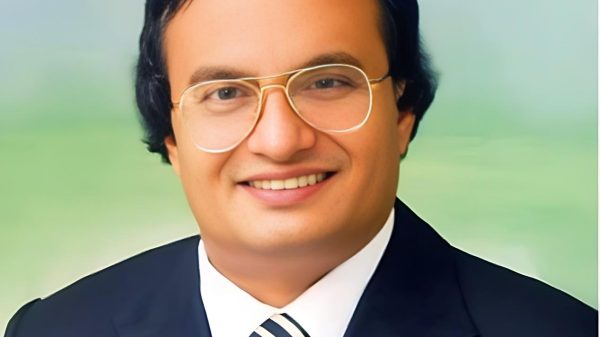
Dr. Abdul Wadud:
Old age is an extreme truth of life. After the golden morning of childhood, after the sunny afternoon of youth and youth, and after the busy afternoon of middle age, old age descends in the twilight of life. This time is actually the last chapter of human life. If you do not die prematurely, you have to finally enter this stage. Old age is the extreme truth of life. Childhood, adolescence, youth and old age are the four common phases of a human life.
As long as there is strength in the body, a person never thinks that he will become old one day. But due to the pull of nature, we will become old one day. This is the cycle of life. It is present in all animals and even in trees. Former President of India, scientist A.P.J. Abdul Kalam said, “Today you may be strong but time is more powerful than you because in the flow of time, one day you will lose strength – an old man suffering from disease.” Therefore, it is not appropriate to neglect the elderly under any circumstances. Therefore, one should come forward to help them. They should not be hurt mentally or physically. Elderly does not mean old, weak, incapable and a burden on the world, but they are the craftsmen of today’s beautiful society. As guardians of a family, they are like banyan trees. Their wisdom and experience are always relevant, but some families are extremely neglected. Indifference towards them hurts their minds greatly. In today’s times, the problem of loneliness has emerged strongly among the elderly. There are many families who do not have any of their children. It is a cruel irony of fate that some people are necessarily placed in old age homes. This is more due to family and financial reasons, many daughters-in-law do not want to tolerate their in-laws at all. I would like to say in the voice of the artist Nachiketa, “My son is a great man – a great officer, he does not go to great flats, he does not see them here and there. Various kinds of furniture – expensive and expensive – I am the only one who is the least expensive. My son has immense respect for me – so my address is the old age home.” Due to social degradation, the elderly today are unprotected, helpless, isolated and plagued by mistreatment. Mughal Emperor Aurangzeb died in 1707 AD at the age of 89. He said this in a letter written to his son Kambaksh. “Today I am old, decrepit, weak, in my past life, I had so much wealth, abundance, and power. Today the bright days of my life are gone. There is only skin, bones, and hair. Today I am alone, helpless, confused, unable to earn, an elderly person with weak health.”
The elderly are neglected and neglected everywhere, at work, in hospitals, in the market, at places of entertainment while collecting pensions. But in many developed and underdeveloped countries, even in neighboring countries, they are socially and officially recognized as senior citizens. Which has not been established in our country yet. The elderly should not be considered a burden, but should be considered an asset to the family. Their invaluable contribution to the state, society and family is invaluable. Their wisdom, experience and work assistance are relevant for all times. Despite this, there is a kind of neglect towards the elderly in the society in every country. In our country, division is increasing day by day due to financial and social reasons. The joint family has been broken and a single family has been formed. Due to this, our desired social system has been somewhat broken. Whether this is a qualitative or social change is a matter of reflection. The knowledge gained from the experience of the elderly and the creative science and mental skills of the prophets will lead this world forward in the trend of the new era. This is our expectation. We talk about integrated education. However, we do not leave anyone behind or consider anyone a burden. Therefore, instead of considering the elders as a burden, we should consider whether we can utilize the knowledge gained from their experience.
Today, the family structure is collapsing, and the elderly are being placed in old age homes. Yet sociology proves that the elderly are not just family members, they are the moral guides of society.
If the young can learn from the elderly, the division in society will decrease and tolerance will increase. The role of the elderly in Bangladeshi politics can be a bridge of reconciliation. Nelson Mandela showed the world the way with a message of forgiveness and unity, not revenge, after 27 years in prison. Our senior politicians, thinkers, and teachers can also teach the young – not shortcuts, but moving forward through patience and democratic practices is the way to reach the goal of life. The elderly know how to survive with limited resources. If young entrepreneurs can learn from the elderly, they will be able to move forward strongly in global competition. In China’s Confucian philosophy, the elderly are called the foundation of the family and society. In the West, the elderly are making special contributions to policymaking and education. The time has come for Bangladesh to see the elderly not as a burden of the past, but as beacons of the future.
In Japan, the elderly are called ‘living treasures’. In Japan, efforts are being made to accustom the elderly to special dietary habits and improved lifestyles to protect their health. For this, the elderly are being told to eat fruits, vegetables, fish, seaweed and soybeans instead of oily non-vegetarian food. Due to this, the elderly’s heart problems have decreased by about 36 percent. The government is bearing the medical expenses of the elderly. In addition, special robots have been created to help them serve food, in parks and gyms. The elderly can also help the country’s economy by spending money on travel, entertainment and food products. Therefore, in Japan, the elderly are considered as assets rather than a burden on society. In that country, the elderly are given considerable respect and prominence in the family and workplace. They travel to different places alone and the elderly celebrate the third Monday of September every year as ‘Elderly Day’.
The first World Population Conference held in Bucharest in 1974 acknowledged that “at present, two issues of global population are of significance, population explosion and aging, which is increasing at a slow pace. Taking into account the threat of aging population, the Vienna International Plan of Action on Ageing (VIPAA) was adopted in 1982 to formulate policies, plans and programs on aging worldwide, which was approved by the United Nations General Assembly. The United Nations has been celebrating the International Day of Older Persons on October 1 every year since 1991 to create widespread public awareness about this problem, citing aging as the main challenge of human life. The number of elderly people around the world is gradually increasing. It is estimated that the number of elderly people in the world will double by 2050, reaching about 2.1 billion.
An alarming rate of growth of the elderly population in Bangladesh is that the population aged 65 years and above is gradually increasing. In 2022, the census showed that the population aged 65 years and above was 9.7 million, which is 5.89% of the total population. The World Economic Forum has considered the elderly population as a major risk to the economy of Bangladesh. The elderly population is coming as a major challenge for the future of the world. In 2002, the International Conference on Elderly Population in Madrid, attended by 159 countries, identified 45 risks to the world economy, the 5th of which is the increase in the number of elderly people. Recent statistics show that the growth rate of the elderly population in Bangladesh is much higher than the growth rate of children. As a result, the total elderly population will exceed the child population. Therefore, it appears that in the future, the elderly will be a large part of the population in Bangladesh. In this era of globalization, the joint family system is being broken and single families are being formed. The elderly population is the silent victim of this change. About 75 percent of the people in this country live in villages. As a result, about 75 percent of the total elderly live in villages. It is a sad but true fact that when socio-economic problems are assessed, more than 55 percent of the country’s elderly live in villages below the poverty line. Amidst this widespread poverty, most of the elderly are victims of various adverse conditions, including health problems. In many families in rural areas, children share the responsibility of supporting their parents like property, as a result of which the elderly are deprived of basic services including medical care. The elderly are neglected and neglected by the family and society. In an undesirable situation, the elderly, who are considered an additional burden on society, suffer from extreme depression and inferiority complex.
Many are victims of family breakdown, mental anguish, loneliness and neglect. Although the elderly living in urban areas enjoy some health care facilities, it is completely absent in villages. Their professional service has not yet been developed in our social system. Long-term and palliative care is needed for the elderly. But we are not very aware of this.
Article 15(a) of the Constitution provides for the right to basic necessities of life including food, clothing, shelter, education and medical care, and Article 15(d) provides for the right to social security, i.e. the right to assistance from the government in the event of want in the event of unemployment, sickness or disability, widowhood, orphanhood, old age or other similar circumstances. Preparing for the economic and social changes associated with an ageing population is essential to meet the Sustainable Development Goals 2030 commitment to “Left no one behind.”
The government has formulated the National Elderly Policy 2013 and the Parental Maintenance Act 2013, which is a groundbreaking step, including the provision of old age allowances for the social security and safety of the elderly.
Socrates said-‘An unexamined life is not worth living.’ The life of the elderly is the tested life, where the lessons of struggle and the glory of patience are stored. An African proverb says-When an elder dies, a library burns to the ground.’ Losing an elder means the burning of a library. Therefore, if the younger generation does not learn from the experience of the elderly, then they will lose the light on the path of the future. They will lose their guide. The young people of today are the elders of tomorrow. It is time to accept this infallible truth and reality and take a solemn oath to give due dignity and respect to the elders.
Author: Wildlife expert , educator, researcher, and political analyst, founder of the Fikamli theory .
স্বর্বস্বত্ব সংরক্ষিত-২০২৩-২০২৬,স্মার্ট টিভি,র ওয়েবসাইটের লেখা,ছবি,ভিডিও অনুমতি ছাড়া ব্যবহার করা দন্ডনীয় অপরাধ।












Leave a Reply