শুক্রবার, ০৬ নভেম্বর ২০২৬, ০৬:২৩ অপরাহ্ন


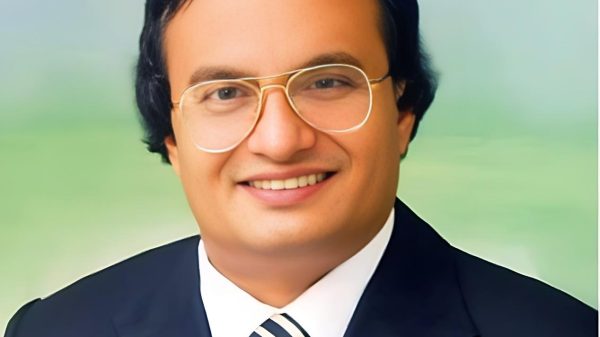
Dr. Abdul Wadud.
Today is October 24, the anniversary of the birth of the United Nations. This world’s largest international organization was founded on this day in 1945 by 51 countries. It currently has 193 members. Bangladesh is the 136th member of this organization. The success or failure of the United Nations, which began its journey to establish global peace after World War II, is still debated.
The United Nations was established in 1945 to rebuild the world from the ruins of World War II and to free humanity from fear and want. For more than eighty years, the organization has been working for world peace and global development. However, when the United Nations is mentioned, everyone talks about its failures, and its achievements are overshadowed. There is no doubt that the successes of the United Nations are many, but in the end it is burdened by the weight of failures.
The work and achievements of the United Nations agencies in the field of economic and human development are well known. The activities of the United Nations Children’s Fund; World Health Organization; World Food Program; Food and Agriculture Organization; Educational, Scientific and Cultural Organization; and the United Nations Development Program have taken global development to a new level, while also playing a strong role in eradicating poverty and ending hunger in various countries of the world.
The role of the United Nations in formulating the world’s Millennium Development Goals and Sustainable Development Goals and in their implementation is undeniable. The United Nations World Food Programme, human rights and refugee organizations are constantly working against various odds to avoid famine, ensure human rights, and help millions of refugees in various countries of the world. The United Nations and its agencies have been awarded the Nobel Prize several times for their work.
But along with all its successes, the list of failures of the United Nations is not small. The nature and structure of the organization, the influence of big countries, interference and control, the limited freedom in its work – all of these have long called into question the relevance and effectiveness of the United Nations. At the same time, it is important to remember that the United Nations was born in a particular time and context of global reality. The world has changed in the last eighty years, as has the context in which the United Nations was born. As a result, the organization of yesterday cannot deal with the current reality, let alone the future. In the current situation, structural reform of the United Nations has become inevitable.
There is no doubt that the world context today is different from that of 1945. At that time, the five most powerful countries—the United States, the United Kingdom, China, Russia, and France—were permanent members of the United Nations. The status of other countries was that of ordinary members. If these five countries did not agree on any issue, the United Nations could not take any decision on any issue. Since this policy of not being able to agree on anything, the United Nations could not succeed in establishing world peace.
The United States and its allies attacked Iraq without consensus. Such an attack on an independent state without the support of the United Nations is not only illegal, but also immoral. But the Anglo-American moralists carried out the attack by force, believing that Iraqi President Saddam Hussein had a stockpile of weapons of mass destruction. The United States, talking about peace, started a war and devastated the country. About a million people died. In the end, the country fell into a terrible humanitarian and economic disaster. After that, the West left the country.
The attack on the Taliban in Afghanistan is another controversial US action. China and Russia did not participate in that attack or war. The attack on that country was also carried out without the support of the United Nations.
The United Nations has been acting in a two-sided manner regarding Palestine. The state of Israel was established by occupying Palestinian land. The United Nations is silent here. Despite repeated attacks on Palestine, the United Nations only responds with statements like ‘expressing sorrow and condolences’. There has also been discussion in the Security Council to label Hamas, which is fighting for the independence of Palestine, as a ‘terrorist organization’. Despite committing crimes against humanity, the United States or its allies have not demanded punishment for Israel. As a result, the United Nations has repeatedly failed to take punitive action against the country.
Although the UN is silent on Palestine, it is vocal about Ukraine. When Russia attacked the country, the UN started speaking in the tone of the United States. The United States and the Western world have imposed one sanction after another on Russia over the Ukraine issue. The UN is on the side of the West in these sanctions. Yet it has not taken any strong steps to stop the war.
Even though the United Nations cannot stop the war, it is fulfilling its responsibility by building memorials to the genocide committed during the war or by showing some activity in distributing relief and reconstruction in war-torn areas. It is also working to evacuate civilians from war zones to safe places. They have no activities beyond this.
From the Berlin crisis after World War II to the recent war in Ukraine, the UN has done little except condemn, issue statements, and pass resolutions in the Security Council. The UN played a key role in resolving the Cuban Missile Crisis in 1962. However, the UN had no role in the Vietnam War or the Korean Peninsula War. The Vietnamese still bear the scars of the napalm bombings due to the UN’s failure.
The UN could not stop the expulsion of Rohingyas from Myanmar. The UN has even failed to take strict steps to return millions of Rohingyas who have taken refuge in Bangladesh to Myanmar. They could not protect civilians in Libya or Iraq. Instead, the world organization has organized wars in Iraq and Somalia in the name of destroying weapons of mass destruction. The UN has completely failed to resolve the Kashmir issue. The organization also played the role of a witness during the Rwandan genocide. When the genocide of Serbs in Srebrenica, Bosnia, took place, the organization only watched with tin glasses.
The United Nations is essentially a global alliance of victorious powers in World War II. Although it was said at the time of its founding that the mission of this intergovernmental organization was to prevent war and establish peace in the world, they have failed to implement the dream that the organization had shown.
The failure of the United Nations is visible due to the appeasement policy, including the member states’ prioritization of their own interests over international peace, failure to prevent the arms race, and so on. In addition, another major challenge facing the United Nations is to address the climate crisis. The United Nations is mainly funded by major powers. The countries that contribute money play a key role in making any decision. If the United Nations is to play an effective role in the 21st century, there is no alternative to its radical reform.
Considering the current organizational structure of the United Nations, the role of member states, the procedures and rules, and the international political background, the need for its reform, i.e. reorganization and restructuring, is easily conceivable. With the aim of reforming the United Nations, former Under-Secretary-General Kofi Annan announced a ten-point program for administrative reform. Among these, it is worth mentioning – reducing budget expenditure, strengthening economic and social development efforts, appointing the Secretary-General in accordance with the decisions taken by the United Nations General Assembly, etc.
Former UN Secretary-General Dr. Boutros-Ghaliou’s historic proposal for UN reform needs to be implemented. Analysts blame the current failure and ineffectiveness of the organization on its organizational structure, representation system, economic management, and the interrelationship of major powers. The work of the UN Secretariat, economic and social departments must be coordinated and adjusted in light of the changing world order.
Today, the Axis powers of World War II are superpowers in various fields; some in economic terms, some in overall terms. The Security Council needs to be made more effective to reflect the balance of geopolitical and economic power in the world.
The International Court of Justice (ICJ), the UN’s main judicial organ, is facing a frustrating reality today. Although the court declared Israel’s occupation “illegal” in 2024 and supported the Palestinians’ right to self-determination, the court has no effective power to implement its rulings.
In the ongoing genocide case against Israel in Gaza, the ICJ has repeatedly cited the actions of Israeli leaders as crimes against humanity. But there is no obligation to comply with the ICJ’s rulings—it depends on the goodwill of the state concerned.
The effectiveness of the ICJ depends on political will and the support of the Security Council, which leaves states that are blessed with veto-wielding powers virtually unaccountable.
A timely and major reform program for the ICJ is essential. The ICJ’s financial and organizational autonomy must be increased. An independent structure must be created to eliminate the political influence of the Security Council in implementing its judgments.
The International Atomic Energy Agency (IAEA), which is responsible for ensuring global nuclear security, has in reality become a largely marginal organization. While Israel and the United States repeatedly exert pressure on Iran, the IAEA has effectively sat on the sidelines.
The IAEA’s main limitation is its lack of enforcement powers. It has no direct power to compel any state. Unlike the pressure and investigation into Iran’s nuclear program, nuclear-weapon states like Israel, which are not parties to the NPT (Nuclear Weapons Non-Proliferation Treaty), are not investigated or questioned.
This double standard is eroding trust in the UN and its agencies in the global south. The IAEA must be transformed into an impartial, transparent, and equal organization for all states.
It is clear today that the current structure of the United Nations has failed to uphold international order. In such a situation, emerging powers such as Turkey, India, Brazil, and South Africa are playing an active role in demanding reform.
Reform of the United Nations is essential to maintain international peace and security in line with the changing world order and to become an effective organization against terrorism, hunger, poverty and illiteracy. In the current international situation, it is the demand of the hour to further increase the number of permanent members of the Security Council. Through the necessary reforms, it is still possible to transform the United Nations into an internationally acceptable organization conducive to peace, prosperity and security for the people of the world.
May this largest organization in the world become an effective democratic organization to establish peace in this world of wars and conflicts, which is still the hope of the peace-loving people of the world. May the unfulfilled dream of world peace be fulfilled through the auspicious efforts of the United Nations, which has been going on for over eight decades.
Author: Father of Fikamli Theory
Academic, researcher and political analyst
Wildlife expert.
স্বর্বস্বত্ব সংরক্ষিত-২০২৩-২০২৬,স্মার্ট টিভি,র ওয়েবসাইটের লেখা,ছবি,ভিডিও অনুমতি ছাড়া ব্যবহার করা দন্ডনীয় অপরাধ।













Leave a Reply